
.svg)
Book an appointment
Book an appointment

August 12, 2026
Communication tips often stall after betrayal because the real problem is safety, not skills. Here's why the standard advice fails and what has to come first.
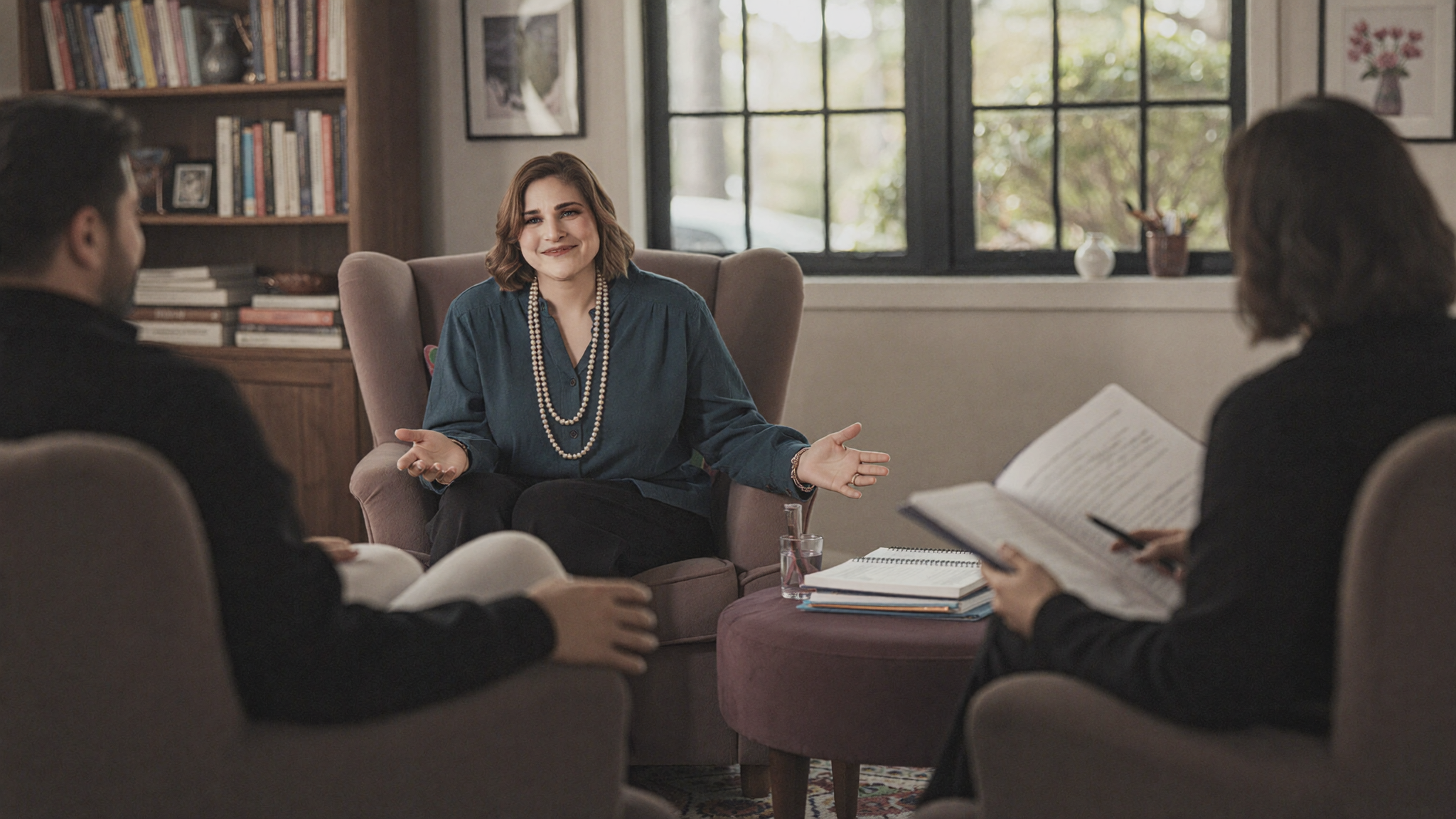
Communication advice—"use I-statements," "listen actively," "schedule a weekly check-in"—is the standard prescription most couples receive after an affair, and it is also the reason so many of them stall. After betrayal, the problem is not that two people have forgotten how to talk. It is that one partner's nervous system no longer registers the other as safe, and no communication technique can talk a threatened body out of feeling threatened.
Roughly one in five married men and one in eight married women report having been unfaithful at some point, based on General Social Survey data analyzed by the Institute for Family Studies. Many of those couples dutifully try the communication tools they're handed and conclude they are simply "bad at communicating" when the exercises fail. They aren't. Here is why standard communication advice backfires after an affair, and what has to come first.
Communication advice assumes the problem is a skills gap—that if the couple just learned to phrase things better and listen more carefully, the conflict would resolve. That assumption holds for ordinary relationship friction. It falls apart after betrayal, because the betrayed partner isn't struggling to express themselves; they're struggling to feel safe in the same room.
When safety is the missing ingredient, better phrasing doesn't help. A perfectly delivered I-statement lands on a nervous system that is scanning for the next threat, and the words never reach the place the injury actually lives. This is the core reason so much conventional affair-recovery guidance disappoints—a theme we explore in why nervous system healing comes first.
What breaks after an affair is not communication—it's trust and safety at a physiological level. The betrayed partner's body has learned that the person it counted on can be a source of danger, and it responds the way it would to any threat to survival: alarm, hypervigilance, and self-protection.
That's why a betrayed partner can know, intellectually, that their spouse is trying, and still feel their chest tighten when the spouse comes home late. The reaction isn't stubbornness or a refusal to communicate; it's an unhealed injury doing its job. Recognizing this reframes the whole recovery—the goal isn't better conversations, it's a body that feels safe enough to have them. Our overview of the signs of betrayal trauma shows what that injury looks like day to day.
Communication exercises can actively backfire after an affair for a few predictable reasons:
None of this means the tools are worthless. It means they're being applied out of order—before the conditions that would let them work are in place.
Before communication techniques can do any good, three things generally have to come first. The betrayed partner's nervous system needs to stabilize, using regulation techniques that bring the body out of constant threat. The unfaithful partner needs to demonstrate genuine, non-defensive accountability over time—what the research-based Gottman approach calls atonement. And trust has to be rebuilt in small, verifiable increments rather than declared.
This is exactly the sequence the Gottman Trust Revival Method is built around, and it's why pairing it with trauma work matters—a point we examine in what the Gottman Method gets right, and what it misses. Only once safety and accountability are in place does a "weekly check-in" become a tool for connection rather than a trigger.
Effective affair recovery treats the betrayal as a trauma to heal, not just a conversation to manage. In practice that means starting with the injured partner's stabilization, using trauma-informed methods like EMDR to reduce the charge of the discovery memory, and only then layering in the communication and rebuilding work that conventional advice leads with.
It also means realistic expectations. Recovery isn't linear, and a good week followed by a hard one isn't failure—it's the normal shape of healing. Couples who understand this stop grading themselves on how "well" they communicate and start asking whether safety is genuinely returning. For a grounded look at what predicts success, see how to rebuild trust after infidelity.
Yes—eventually. Communication skills matter, but they work only after the betrayed partner's nervous system has stabilized and the unfaithful partner has shown consistent accountability. Sequenced correctly, communication tools support recovery; led with, they tend to stall it.
Shutting down is a trauma response, not a communication failure. When your body still perceives your partner as a source of danger, even a calm conversation can trip the threat system, producing numbness or panic. It eases as safety is rebuilt, not as you try harder to talk.
Not necessarily wrong, but it may be premature. If the exercises consistently trigger distress, that's a signal the underlying trauma needs attention first. It can help to ask whether the approach accounts for betrayal trauma specifically, or treats the affair as ordinary conflict.
Some couples make progress with couples work alone, but when the betrayed partner has strong trauma symptoms, individual trauma-focused therapy often accelerates and stabilizes the process. The two approaches complement each other rather than compete.
It varies with the severity of the trauma and the consistency of the unfaithful partner's accountability. Many couples find that once stabilization and genuine atonement are underway, conversations that felt impossible in the early weeks become workable within a few months.
If the communication advice you've been given keeps failing, it isn't because you're bad at communicating or because your relationship is beyond help. It's because the standard tools assume a safety that betrayal destroyed. Rebuild that safety first—through nervous system stabilization, genuine accountability, and trust earned in small increments—and the conversations that feel impossible now become possible later.
You don't have to figure out the right sequence on your own. Book a free, discreet consultation with Dr. Cammy, a certified Gottman and EMDR therapist serving NYC, Greenwich, Westchester, and Fairfield County, to talk through where you are and what would actually help you move forward.


.webp)

.webp)

I'm Dr. Cammy. I started Bliss in Being after more than a decade of helping couples and individuals navigate trauma, PTSD, and the painful moments that can reshape a relationship. This work is personal to me—and I bring that to every session
Dr. Cammy also practices in the San Francisco Bay Area at drcammy.com.


.png)

© Copyright 2026, All Rights Reserved by Bliss IN Being—Powered by Progeektech


